
Dr. Cotter Invited to Speak at the University of Cambridge!
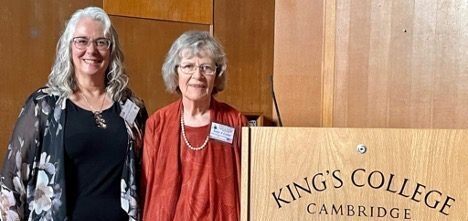
RightStart Math’s author Dr. Joan A. Cotter, and her daughter Kathleen Cotter Clayton, were invited to speak at the 16th International Conference of Mathematics Education for the Future Project in August 2022 at King’s College, Cambridge University, UK. Dr. Cotter discussed why appropriate place value instruction positively influences students’ understanding of elementary math. She explained how reducing the focus on counting and increasing the use of transparent number naming greatly improves number sense. Kathleen presented how using the linear fraction model and strategies greatly improves the student’s understanding and application of fractions. You can find a summary of Dr. Cotter’s presentation here, and the PowerPoint presentation of Kathleen’s talk here. The conference proceedings and all the abstracts from the conference can be found at this link. If you are interested in reading Dr. Cotter’s and Kathleen’s abstracts, you can find them on pages 117 and 111. Dr. Cotter and Kathleen presented and stayed at King’s College, Cambridge University, UK, which was founded in 1209. Here is a picture of the courtyard at King’s College. It was an incredible honor for Dr. Cotter and Kathleen to be invited to such a noble institution. They were thankful for the opportunity to present some of the reasons why RightStart Math makes a positive impact on how students learn math. Dr. Cotter and Kathleen were privileged to meet, share ideas with, and learn from attendees from Poland, Turkey, Ireland, Greece, South Africa, Croatia, and many other countries. What an amazing trip! Contact us today for information on how RightStart Math can improve your elementary and middle school students’ math education.
Start Math Right Dr. Cotter’s Greatly Anticipated Book is Here!

We are excited to announce the release of Dr. Joan Cotter’s new book, Start Math Right—a valuable resource designed to empower educators and parents with innovative strategies for teaching mathematics effectively. Drawing on her decades of experience in math education and curriculum development, Dr. Cotter provides practical tools and a fresh perspective to help learners build a deep and lasting understanding of math. In Start Math Right, Dr. Cotter explains the foundational philosophies behind the RightStart™ Mathematics curriculum, offering insight into why and how these methods lead to real success in the classroom. Rather than focusing on rote memorization or repetitive worksheets, this book explains the importance of helping children learn how to think mathematically. With an emphasis on visualization, hands-on learning, and meaningful connections, readers will discover how to transform math from a subject students fear into one they truly understand—and even enjoy. The book is ideal for a variety of audiences. Whether you’re a veteran teacher looking to deepen your practice, a new educator just beginning your teaching journey, or an administrator working to bring renewed energy and effectiveness to math education at your school, Start Math Right is written for you. The tone is accessible and encouraging, with real-life examples and practical suggestions that you can implement immediately. Curious to learn more? Listen to Dr. Cotter discuss the book in her own words and get a glimpse of the inspiration and research behind it. You can also explore a sample of Start Math Right to preview the content. If you’re ready to transform your approach to teaching math and make a lasting impact on your students or children, Start Math Right is the perfect place to begin. For ordering information, contact us today!
Symmetry, by Dr. Joan A. Cotter

The Hungarian journal, Symmetry: Culture and Science, published Dr. Cotter’s article called “Symmetry for Children Using Drawing Board Tools and Tangrams.” In this article, Dr. Cotter explains how children as young as 5 years old can create equilateral triangles, hexagons, squares, and other figures using a scaled-down version of traditional drafting tools, such as the T-square, 30-60 triangle, and the 45 triangle. Older students are able to draw lines and create figures around a line of symmetry, both vertically and horizontally, using these drawing tools along with tangram pieces. As students work through the activities discussed in the article, they learn to analyze what needs to be drawn and how to make a plan to achieve the desired results. Throughout this piece, Dr. Cotter explains how to use drawing tools to divide equilateral triangles into halves, thirds, fourths, ninths, and twelfths. She shows examples of how to draw equilateral triangle symmetry, hexagon symmetry, square symmetry, and tangram symmetry that involve rotation and variations. You will also see colorful examples of how to draw inscribed and overlapping stars, which are activities students thoroughly enjoy. Learn about the educational benefits students gain when teaching more than just basic arithmetic. One benefit of drawing activities is that they combine artistry and mathematics. As students work through these engaging projects, they enjoy their creations, develop an appreciation for geometry, and discover the beauty of mathematics. To read the article in full and get ideas of how you can bring more geometry into your classroom, click here. Contact us for more information about how RightStart Math includes geometry in the curriculum, even in the elementary grades.
Subitizing Quantities Research
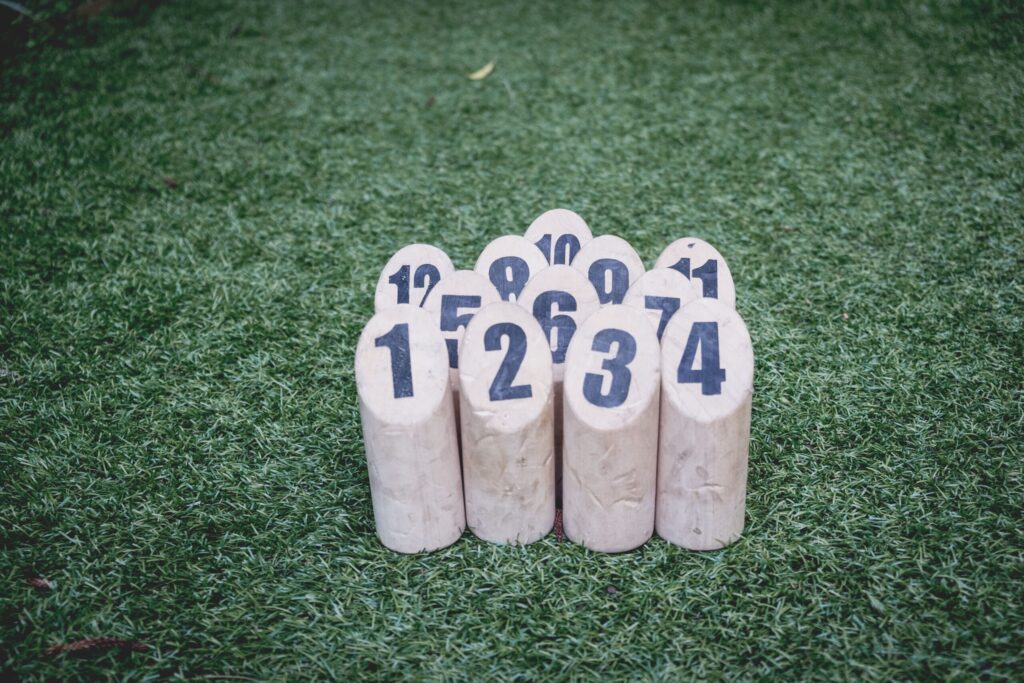
If you have been using RightStart Mathematics for even the shortest amount of time, you realize that Dr. Cotter focuses on helping students to subitize quantities from one through five and then beyond by grouping the quantities in fives because of the grouping of fives by color. New research has discovered why humans easily see quantities one through four but struggle with higher quantities. Interestingly, there are neurons that fire for specific amounts up to the quantity of four. For quantities over four, there is confusion among the neurons. For example, if a person sees eight items, the neurons associated with seven, eight, and nine will fire. Though the researchers were not focused on grouping quantities by color, the results may help us understand how grouping in fives by color will help our students excel at subitizing larger quantities. For more information, please read the article in Nature. If you would like to see how RightStart Math can help your students improve their math skills, contact us.