
RightStart February Newsletter

NEW PRODUCT! RightStart Just released…. Multiplication and Division Tutoring Book 2! This Tutoring program will help students learn the process of multiplying and dividing multi-digit numbers, including short division and long division. As students develop an understanding of multi-digit multiplication and multi-digit division, the program has them play games to reinforce and practice these processes. In addition, this book also has Skill Days, which include multi-step word problems. Most of the word problems require the student to use multiplication and division to solve. However, some problems will also require the use of other operations. Here is a link for more information about this and all the RightStart Tutoring programs. RightStart wishes you a Happy Valentine’s Day! Scott Hayden said, Teachers have three loves: love of learning, love of learners, and the love of bringing the first two together. We know you pour yourselves out daily for your students. At times, it may feel that your passion and commitment go unnoticed. But you are making a difference in the life of each young person you teach. We want to partner with you and support you! If you have any questions about a lesson or want some ideas on how to help a student, contact us. We are here for you! RightStart Fractions in February Be one of the first 10 people to submit a testimony stating how RightStart has helped your students understand fractions and get $100 worth of FREE card decks for your classroom! Send your testimony to: Info@RightStartClassroom.com. Your RightStart Math partners, Teresa, Rachel, Maren, and Kathleen
December 2023 Newsletter: Bingo Cards

Happy Holidays! We know you are looking forward to the upcoming break, spending time with family and friends, and briefly stepping away from the classroom. Even though you probably do not want to think about it now, you will also want to ensure your students do not forget what they have learned. This is why this December, we are providing for you: game Bingo Cards! Our gift to you: RightStart Math wants to help you encourage your students to work on their math facts – but in a fun way. We have created… FREE December Bingo Cards …to encourage students to have fun playing math card games over the break. We have included full-color cards, as well as black and white cards to accommodate your printing needs. You can encourage student participation by having a contest to see how many of your students can complete a row or column of game ideas or maybe even complete the entire card! Another gift Do you need extra decks of cards for your classroom? At the end of December, we plan to give away $100 worth of Card Decks to the first 10 people who share a testimonial video of how they have seen the math card games help their students. The recording should be between 1 and 4 minutes in length. Please send your testimonial video to: info@rightstartclassroom.com. These videos may be used for promotional purposes. By sending the testimonial video to us, you are giving us permission to use them. We hope you have a lovely winter break! See you in 2024! Your RightStart Math partners, Teresa, Rachel, Maren, and Kathleen
January 2024 Newsletter
Easing Your Load I don’t know about you, but I get a little overwhelmed when I return to work after the holidays. Do you feel the same? Maybe you look at the number of weeks left in the school year and wonder how you are going to get it all done. In this January Newsletter, we will share with you how we can help. Pacing Schedules If you feel like you are behind schedule, contact us! We regularly help teachers get back on track. So, let us help you! Contact us for a quick conversation to determine where you are and to discuss your classroom environment and size. We will put together a schedule that you can use to complete your students’ instruction by the end of the school year – without added stress! Game Videos Do you want to learn how to play a game quickly? We have short videos that show you how to play RightStart Math card games! Here is a link to sample these videos. You may even want to have your students view the video prior to playing a game – so you don’t have to! WE ARE LOOKING FOR TESTIMONIES! Be one of the first 10 people to submit a video testimonial of how you have seen the math card games benefit your students and receive FREE card decks (valued at $100)! The recording should be between 1 and 4 minutes in length. Send your testimonial videos to: info@rightstartclassroom.com These videos may be used for promotional purposes. By sending a testimonial video to us, you are giving us permission to use it.
October 2023 Newsletter
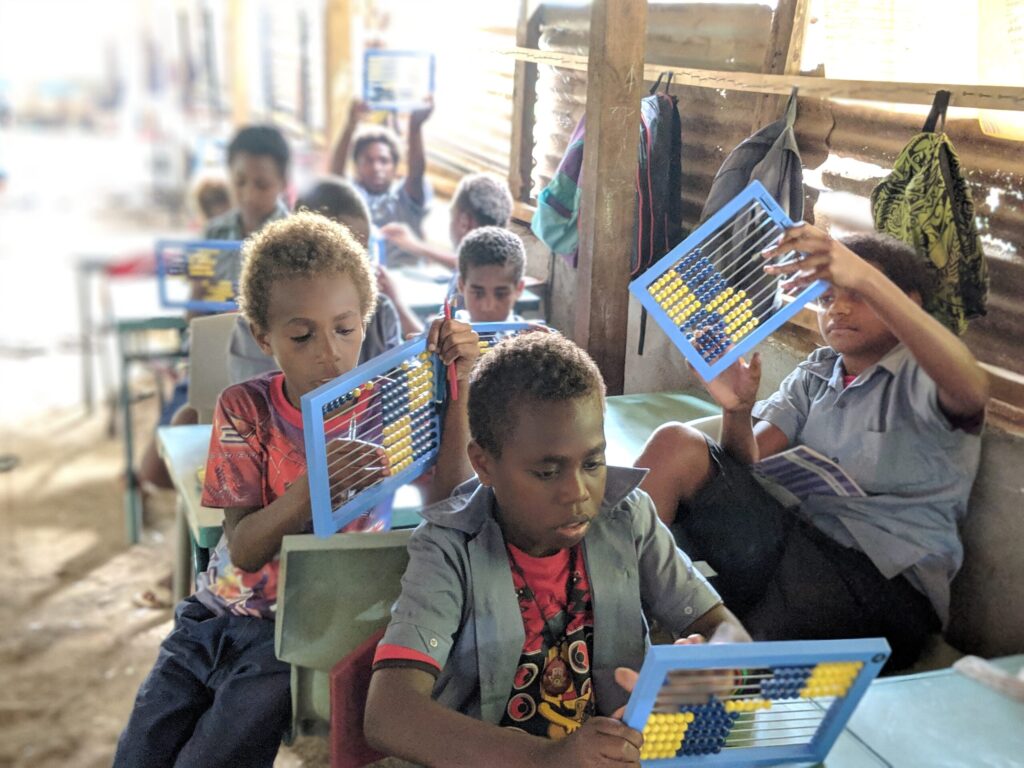
Unsure of how to correctly use the Cotter Abacus? Click here to view a short video that will show you how to use the abacus correctly and efficiently. When students use the abacus correctly, they can see math facts and understand mathematical processes better. Feel free to contact us for more information about the abacus and how it can help your students learn. Do you have transfer students coming to your class? Many of the new students coming into your class have not used RightStart Math and may be behind in their progress. How can you catch them up? Here are some suggestions: First Lessons in your book. Teach the student from the first lessons in the Teacher’s Manual (You can also work through the review lessons from a previous level). Those first lessons will help your student learn how to use the abacus and strategies taught throughout the year. Tutoring Programs. Consider using our Tutoring programs if you find your student is behind in grade-level content. We have topics such as Number Sense (addition and subtraction), Multiplication and Division Book 1 (basic multiplication and division math facts), Fractions, and more. Peer instruction. Help your new student make new friends by pairing them up with a student in your class. Peer instruction is a great way for students to develop leadership skills and help your new student understand how to use the RightStart Math manipulatives and strategies. For more ideas, do not hesitate to contact us. Have a game you want to play but don’t have time to read the directions? We have instructions for all the games available by video through Vimeo! Each video is only a couple minutes long and will demonstrate how to play the game. Here is a sample of some of the games. All of the games are available through an annual subscription of $206. Click here to subscribe or contact us for more information! Remember, you have FREE year-long support! Click here to contact us.
November 2023 Newsletter: Math Card Games
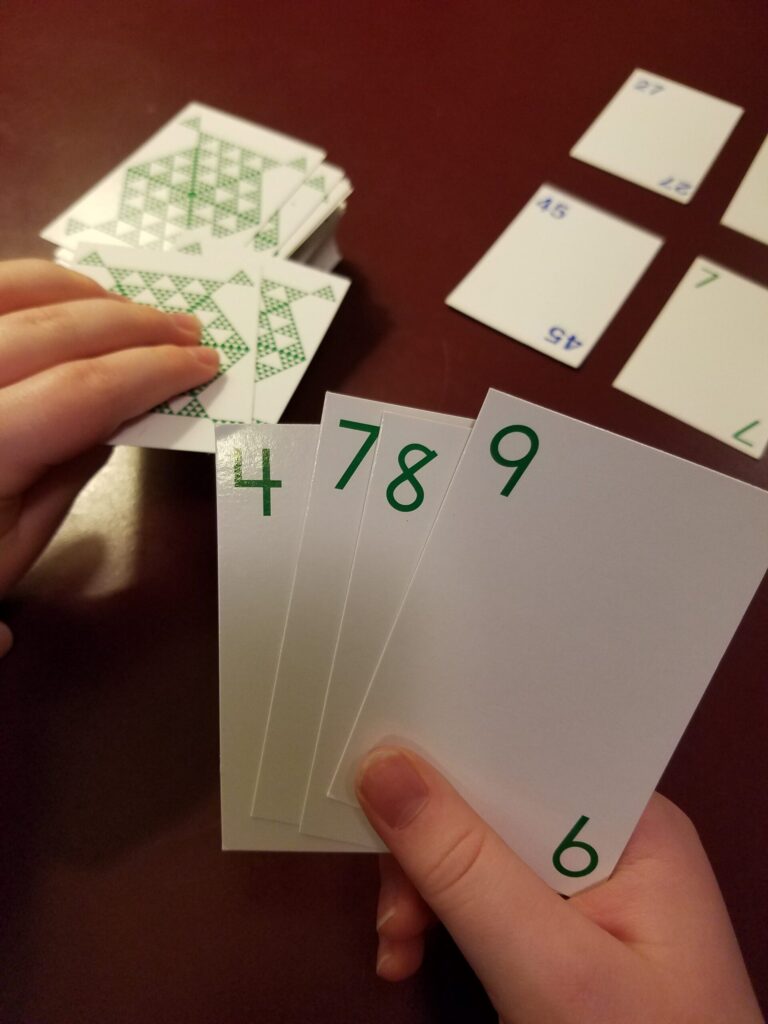
Why are games important? We all know that practicing math facts is necessary, and games are a fantastic way to get the job done. In fact, it can be said that games are to math as books are to reading. However, they should be more than just a glorified version of flashcards; they must be designed to teach. When playing RightStart’s math card games, students get immediate feedback from their peers or from the game itself, increasing their proficiency. So, how do you help your students play more math games? End each math lesson with a game Use ten minutes before or after recess/lunch or before dismissal to play a game Encourage your parents to play math card games at home** Use games and other activities to challenge your students, especially your early finishers. In addition, you can provide your students with tangram puzzles and geometry net cards for engaging and educational supplemental learning activities. Do you want a way to assess student progress as they play the math card games? Click here to learn how. **We can help you get the math card games kit into the hands of your parents at a discounted price! Contact us to find out how! Parent Game Night Experience Help your parents understand the value of playing card games at home by having a parent night at your school. Parent Game-Night Options: We can come to your school and help you lead the parent night. You only need to cover our travel expenses. Teachers can oversee the tables and help parents learn how to play the games. Students can oversee the tables and teach the games. Encourage attendance by choosing a fun theme: Parents-only Hors D’oeuvres Night (wine and cheese, etc.) Casino Night (decorate the room like a casino) Family Fun Night (all family members and friends are invited) Game Instructions Available on Video Finally, are you interested in learning how to play the games quickly? We have video instructions on how to play every game used in the RightStart Math curriculum. We have game instructions on video! Feel free to view a sample of them. For more information about the year-long subscription, click here. As always, if you have any questions or concerns, please do not hesitate to contact us. We are here to help you have a fabulous school year! Your RightStart Math partners, Teresa, Rachel, Maren, and Kathleen
Parent Involvement and Parent Letters

Studies show that parent involvement positively influences student learning. That is why RightStart Math has created Parent Letters for your teachers to send home with their students. The National Coalition for Parent Involvement wrote, Parent involvement in education is crucial. No matter their income or background, students with involved parents are more likely to have higher grades and test scores, attend school regularly, have better social skills, show improved behavior, and adapt well to school. What is included in the Parent Letter? Each parent letter starts with a summary of what the student learned during the week. Then it provides three or more activities the parent can do at home to support their child’s learning. Next, there is a list of math card games that the student’s family can play at home to reinforce the skills the student is currently learning and to review the skills the student previously learned. Finally, the letter will briefly discuss what the student will learn in the upcoming week of school. These letters are given to the teacher as a Word document so the teacher can add your school logo, their name or signature, and any other pertinent modifications needed. Here are some samples of some parent letters. Kindergarten 1st Grade 2nd Grade 3rd Grade 4th Grade 5th Grade Teachers who use the letters have found them to be an extremely beneficial means of communicating with their students’ parents. Not only does it inform the parents of what their child is learning, it opens the opportunity for more dialogue between the teacher and the parent. If you would like more information about parent letters, contact us! We would love to provide these fabulous resources to your teachers! You can also contact us to find out other ways to improve parent involvement. We have helped schools develop family game nights that provide the opportunity for parents to learn how important the games are to their child’s learning. Game nights are also a fun way to have your students show off what they are learning! Let us know if you are interested in more information about game nights!
RightStart™ Math and Students with Dyslexia

Here are some evidence-based strategies that RightStart™ Math naturally incorporates in the lessons to support students with dyslexia: 1. Students with dyslexia learn best with multisensory input. RightStart™ Math helps students with dyslexia learn and understand math by incorporating at least one manipulative in every lesson. The manipulatives are visualizable and are used to help students see how math works. Each activity using the manipulative includes discovery and explicit instruction to help students understand math facts and math processes. 2. Students with dyslexia struggle with writing and completing worksheets. RightStart™ Math reduces the amount of written work by having students practice skills and demonstrate their understanding through math card games and verbal responses. During the lesson, the teacher asks questions, and the student explores the manipulative and answers the question verbally. To practice math facts and processes, students play math card games. The games will produce the same math facts as included on worksheets, but students do not need to write the answers. I always recommend that the students say the math facts out loud as they play the games to develop greater fluency. 3. Students with dyslexia tend to have working memory deficits. Games Because students with dyslexia struggle to remember math facts, they need a significant amount of practice, specifically interesting practice. As stated previously, RightStart™ Math incorporates games into the lessons to help students practice math facts and processes. There are numerous games available to teach skills, keeping the practice interesting and engaging. Strategies The program develops math fact fluency through strategies to help the student learn the facts, reducing the need for rote memorization. Jo Boaler, an author and math education professor at Stanford University, said this, “I have never committed math facts to memory, although I can quickly produce any math fact, as I have number sense and I have learned good ways to think about number combinations.” RightStart™ Math helps students learn number sense and strategies to help them solve math facts quicker, without draining their mental energy on memorization. Review To ensure students with dyslexia are learning and retaining what is being taught, RightStart™ Math also incorporates daily review through Warm-Up exercises and games. In addition, there are frequent review lessons and assessments. That way, the teacher knows what the students are learning, what they are retaining, and what needs to be reviewed. 4. Students with dyslexia learn better when lessons are taught in smaller chunks. RightStart™ Math lessons are two pages in length, and that includes pictures of the manipulatives being used. Dr. Cotter, the author of RightStart™ Math, has students with dyslexia learn processes in steps. One lesson will build on another lesson until the student has a solid grasp of the full process. 5. Students with dyslexia need comprehension support. Children with dyslexia cannot retain information through rote memorization. They need to understand how things work. RightStart™ Math is all about helping students understand math concepts, not just memorize processes. When students understand how something works and why, they are more likely to remember the process for it. The company believes in this so strongly that it is included in its mission statement: RightStart™ Math: helping everyone understand, apply, and enjoy mathematics. 6. Students with dyslexia tend to have auditory processing disorders. This tends to show itself most notably in spelling when students cannot differentiate between the short vowel sound ‘i’ and the short vowel sound ‘e.’ However, this disorder can also cause difficulties in math, specifically when the student with dyslexia cannot hear the difference between ‘forty’ and ‘fourteen.’ Math way of saying numbers RightStart™ Math presents quantities in various ways to help students with auditory processing disorder ‘hear’ the difference between these two quantities. One strategy used in the curriculum is to temporarily use the math way of saying numbers. For example, students will hear and say the place value, such as ten four (for fourteen) and four ten (for forty). Not only can the students hear the difference between the two words, but they also are developing place value sense. Place value cards Students will also use place value cards and the Cotter Abacus to visualize and demonstrate an understanding of place value through manipulatives. The teacher can see if the student is misunderstanding the word by looking at what they are building. For example, if the teacher asks the student to enter 14 on the abacus or build 14 using place value cards and the student builds 40, then the teacher can quickly see that the student is misunderstanding what is being said. Quick student feedback I have found when students learn both the traditional names and the math way of saying a number, they develop a better grasp of place value. For students with an auditory processing disorder, the teacher can check for understanding of a quantity by having them do the following: Say the number the math way Show the quantity using the abacus and/or place value cards. By using this process, the teacher can quickly determine if the student is hearing the number correctly. Summary Children with dyslexia need to have math presented to them in a way they can understand. The RightStart™ approach to teaching math not only helps these students learn, but they can understand and enjoy it. For more information about how RightStart™ Math can help your students learn, contact us!
Winter Holiday Bingo Cards
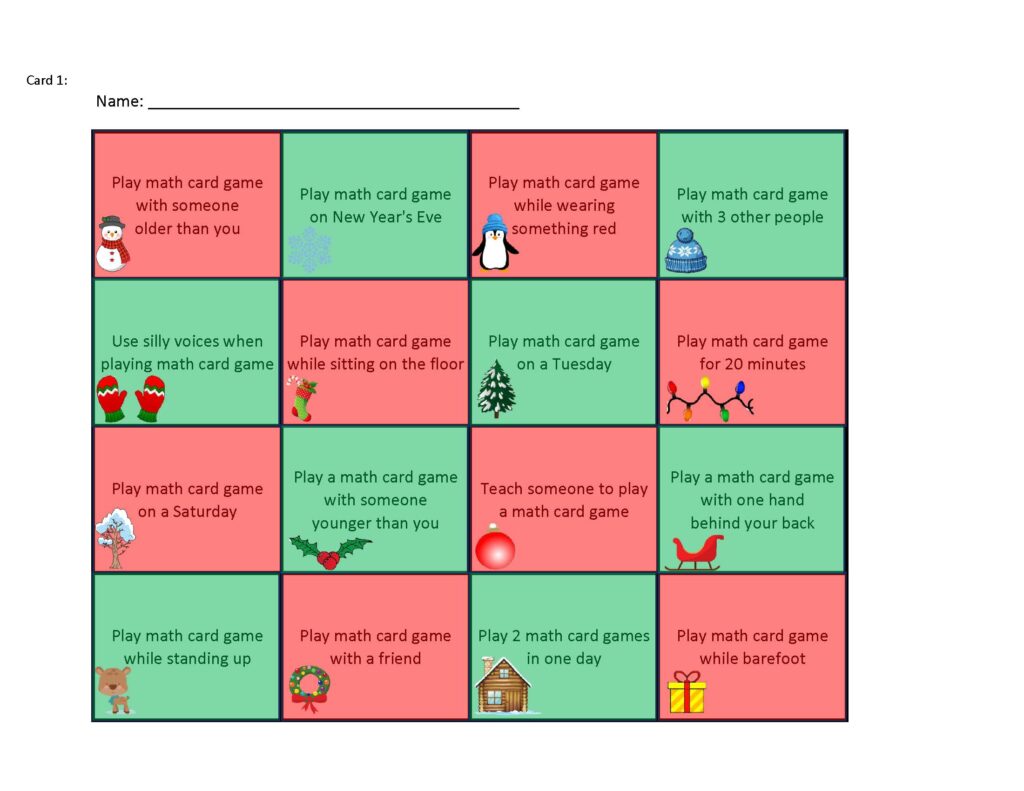
A Fun Way to Practice Math Facts during the Break! We know how important it is for students to keep up their math facts, even during long weekends and holiday breaks. So, we would like to provide a free resource you can use to encourage your students to practice math facts during the upcoming break. To that end, we have created fun, winter-themed Bingo cards. These cards will foster opportunities for your students to engage with their family and friends through fun – and maybe a little silly – activities. You can choose from two styles: full-colored cards or reduced-colored cards. Choose the style that best meets your printing needs. There are six different card arrangements for each style. Full-Colored Bingo Cards Reduced-Color Bingo Cards Ideas to Encourage Participation You can encourage student participation by having a contest to see how many of your students can complete a row, column, or even the entire Winter Bingo cards! Break the class into teams to see which team wins and reward them with a special prize or celebration upon their return to school after the break. Give your students a list of games to choose from to ensure they practice the facts they need. Or you can open it up to student preferences, letting them choose any game they want to play. If you would like a list of games that might be grade-level or skill-appropriate, feel free to contact us! We want to help you ensure that your students continue learning while they enjoy practicing math facts by playing card games. Also, remember that we have all the game instructions available through a subscription to Vimeo. Check this link out for more information about the video game instructions. From all of us at RightStart Math, We hope you have a restful and happy winter holiday break! Your RightStart Math partners, Teresa, Rachel, Maren, and Kathleen
Math Manipulatives, by Dr. Joan A. Cotter
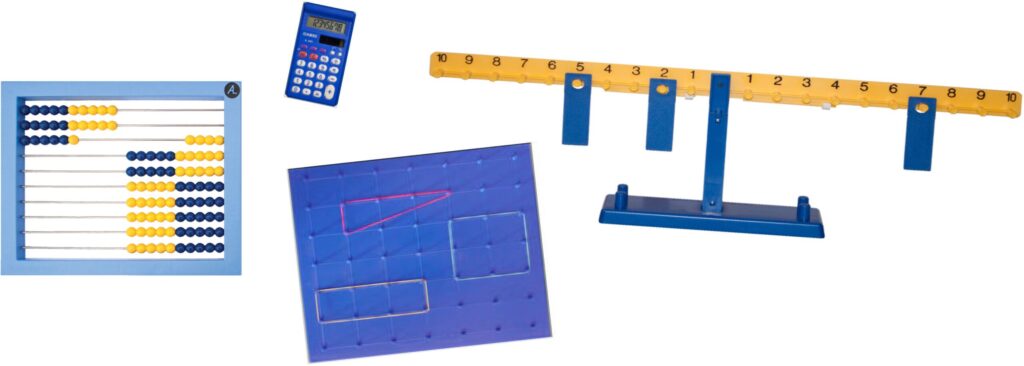
Should teachers use manipulatives when teaching math? What is the purpose of manipulatives? Are some manipulatives better than others? Every mathematics teacher should ask these questions as consider how to effectively teach their students. Let’s start by considering: What is a manipulative? A manipulative is a tangible object a child can physically handle to learn math. Some curricula do not encourage concrete manipulatives at all. Other curricula only use physical manipulatives as a last resort or when the child has learning difficulties. However, other programs, like RightStart Math, use concrete manipulatives as a tool for understanding. What makes an excellent manipulative? An excellent physical manipulative is one the child can imagine, internalize, visualize, and use in their mind. RightStart Math uses specific manipulatives to ensure students can visualize and internalize the math concepts they are being taught. A few of the excellent manipulatives used throughout the RightStart Math curriculum are the Cotter Abacus, overlapping place value cards, fraction charts, base-10 picture cards, and centimeter cubes. How long should my students use manipulatives? According to research, it takes a child one year of regularly using the manipulative to gain the full benefit of it. Many teachers use a manipulative to demonstrate a concept but do not allow enough time for students to explore, discover, and apply mathematical ideas. Remember, a good manipulative can be internalized. It takes time for a student to visualize the concepts a manipulative conveys. Aren’t all math materials considered manipulatives? Many believe that math materials such as rulers, geoboards, calculators, goniometers, clocks, and coins are manipulatives. But really, they are math tools and applications of math, not manipulatives. How important are manipulatives, anyway? Researchers have found there are two vital outcomes when children use manipulatives: They learn and understand mathematics better They have a positive attitude toward math These two outcomes occur when manipulatives are used while teaching a mathematical idea, not as a reward for completing a project or assignment. When concrete materials and games are considered rewards for good behavior, the student views the manipulative as nonessential and is less likely to take it seriously. However, simply using a manipulative does not guarantee the student understands a math concept. Ben A. Sueltz stated, Devices themselves will teach very little arithmetic. It is the guidance of a good teacher that determines their usefulness in discovery and learning. “Counting devices and their uses.” Arithmetic Teacher 1, no. 1 (1954): 25-30 Can I use everyday objects as manipulatives? Some professionals suggest that objects commonly found within the home are good alternatives to math manipulatives because they make math seem more relevant. While this might be true for some math concepts, everyday items do not necessarily make a good math manipulative. In fact, the more interesting the object is in its own right, the harder it is for the child to see the intended mathematical idea it is trying to demonstrate. For example, students who use raisins and candies to view and manipulate quantities can find the treats too tempting, and their attention is pulled away from the math concept. Summary Teachers and schools can choose from a wide array of manipulatives to use in their math classrooms. Each year, new manipulatives are being developed. However, teachers should be selective and intentional to only incorporate good manipulatives in their instruction. The manipulatives they choose should help students understand abstract concepts, make mathematical connections, and enjoy learning math.
RightStart Math Uses Evidence-Based Strategies For Instruction

RightStart Math uses evidence-based instructional models that are proven effective when teaching math. These strategies benefit all learners, including strong students and students with learning differences. Here are some ways RightStart Math does this: Visual Representation One powerful evidence-based strategy is visual representation. RightStart Math uses a variety of manipulatives to help students visualize math. One of the most effective manipulatives used in the curriculum is the Cotter Abacus. The Cotter Abacus helps students understand that numbers are quantities, help them subitize and visualize these quantities, and enable them to develop fluency in math facts and processes. Students with learning differences tend to struggle with memorization. However, when a student applies the Cotter Abacus and other visual representation models in the learning process, the abstract elements of math become concrete, increasing understanding. In addition, many children with learning differences can mentally visualize quantities and strategies, increasing math fact fluency and reducing the need for rote memorization. Schema-Based Instruction RightStart Math provides schema-based instruction for word problems. Students learn to think about the problem and utilize strategies and tools, such as the part-whole circle set, to break apart the problem, leading them to discover which operation to use. Take a look at this example: Robin had 5 pennies and found 3 more pennies. How many pennies does Robin have now? The students use the part-whole circle set and fill in the information they know. Robin has 5 pennies and gets 3 more. Five and three are part of the whole. So, how can they find the whole amount? They need to add. The part-whole circle set is only one of the many tools and strategies RightStart Math uses to help students think about the problem and solve it. Metacognitive Strategies Metacognitive strategies, or memorable approaches and strategies, are used throughout the RightStart Math curriculum and tutoring programs to help students think about and learn facts, processes, and problem-solving procedures. A few of the many strategies taught and used through RightStart Math are: Two Fives Strategy Complete the Ten Going Up Taking Part from Ten Taking All from Ten Distributive Property in Multiplication RightStart Math incorporates these strategies and more throughout the curriculum to help students think about how to solve problems efficiently. Summary RightStart Math’s evidence-based instruction is used worldwide to help students understand, apply, and enjoy math! If you would like to know how to get RightStart Math into your school, contact us.